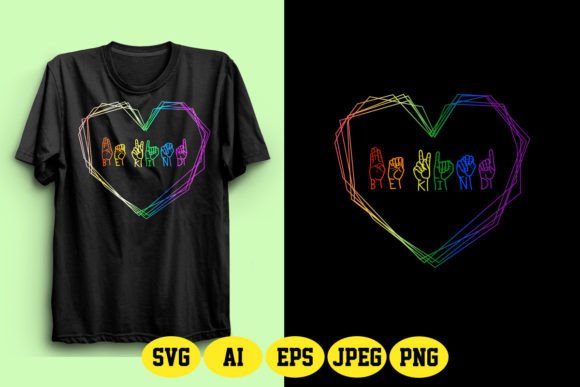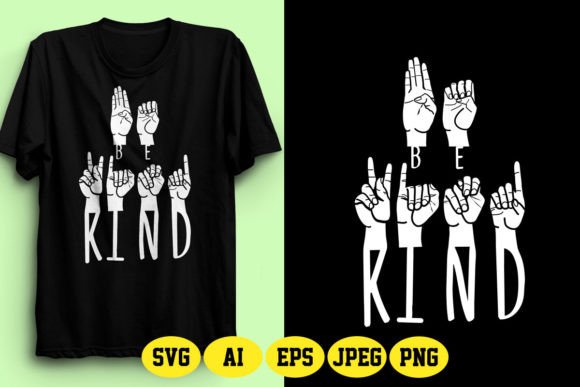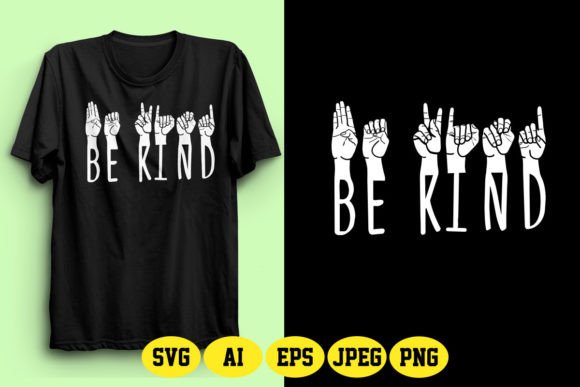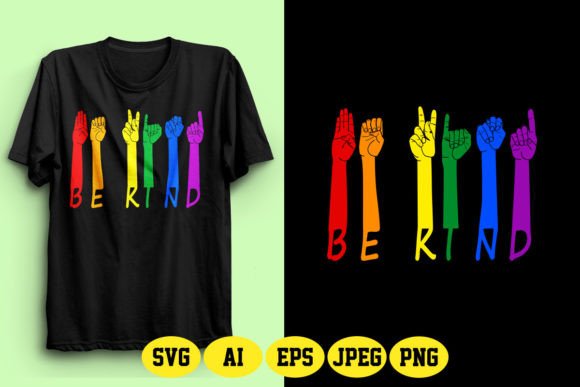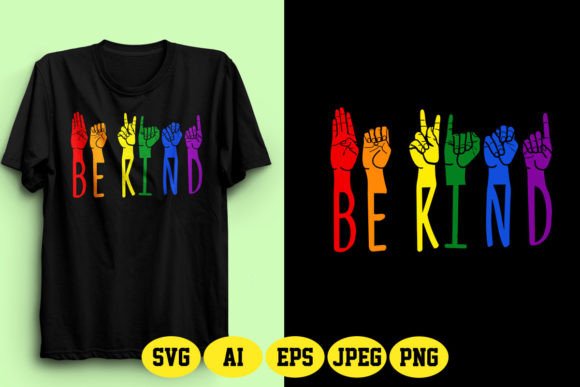
Be Kind ASL T Shirt Design 11
For entrepreneurs, content creators, and small business owners in the print-on-demand (POD) space, sourcing high-quality, versatile assets is not just a creative choice—it is a critical operational decision. The market for apparel and lifestyle products is saturated, meaning that differentiation often comes down to the quality of the underlying design files and how easily they can be adapted across different product lines. This is where Be Kind ASL T Shirt Design 11 enters the workflow. It is not merely a static image; it is a comprehensive digital asset package designed to streamline the production process from concept to final print.
This article explores the practical applications, technical specifications, and integration strategies for this specific design file. Whether you are managing a Shopify store, optimizing an Etsy listing, or executing a bulk order for a community organization, understanding the mechanics of vector-based design files will significantly impact your efficiency and profit margins.
The Core Asset: Understanding the File Structure
In the POD industry, the difference between a profitable item and a return-heavy disaster often lies in file resolution and editability. Be Kind ASL T Shirt Design 11 addresses these pain points by providing a multi-format suite that caters to various stages of the printing pipeline. The inclusion of both raster and vector formats allows for flexibility depending on the manufacturer’s requirements and the end-product type.
- Print-Ready PNG Files: Included are high-resolution transparent PNGs at 300dpi with dimensions ranging from 4500px to 5400px. This level of detail ensures crisp output even when scaled up for large-format prints like banners or oversized back-print t-shirts. The transparency is crucial, allowing designers to place the "Be Kind" sign language graphic over any background color without unwanted white boxes or borders.
- Editable Vector Files (AI/EPS): For those using Adobe Illustrator or similar software, the source files are provided in AI 10 and EPS 10 formats. These are built with 100% vector shapes, meaning they are infinitely scalable without loss of quality. More importantly, they allow for granular control. If a client requests a slight modification to the thickness of the sign language gesture or wants to adjust the kerning of accompanying text, the designer has full access to the node structure.
- SVG Cut Files: For businesses utilizing vinyl cutters, laser engravers, or direct-to-garment (DTG) printers that accept SVG inputs, the included SVG file ensures compatibility. This bridges the gap between digital design and physical fabrication, reducing the need for third-party conversion tools that can introduce errors.
Workflow Integration: From Purchase to Production
Integrating Be Kind ASL T Shirt Design 11 into your business workflow requires a systematic approach. It is not enough to simply download the zip file; one must organize and prepare the assets for consistent use. Here is how this design fits into a typical production cycle.
Preparation and Organization
Upon acquisition, the first step is organizational. Create a dedicated folder structure within your project management system or local drive labeled by theme (e.g., "ASL_Collection") and sub-folders for each format (PNG, AI, SVG). This prevents version control issues later. Because the design is 100% color-changeable, you should immediately experiment with color palettes relevant to your target demographics.
For instance, if your brand targets a youthful audience, vibrant gradients might work well. However, for professional or corporate wellness programs, muted tones or classic black-and-white contrasts may be more appropriate. The ability to change colors effortlessly means you can A/B test designs across different platforms without needing to recreate the artwork from scratch.
Adaptation for Different Products
The versatility of this design extends beyond standard t-shirts. The description notes its suitability for cards, frame artwork, scrapbooks, pillows, bags, mugs, and stickers. Each of these products has unique spatial constraints and material properties.
- Apparel: When preparing for t-shirts, consider the contrast. The design includes colored PNGs specifically for colored t-shirts, but the vector files allow you to invert colors for dark garments. Ensure that the stroke width of the sign language hands is sufficient for screen printing, which has limitations on fine detail compared to DTG printing.
- Accessories: For mugs and stickers, the compact nature of the "I Love You" sign language gesture works beautifully as a focal point. Use the SVG file to ensure clean edges for die-cut stickers, which rely on precise vector paths rather than pixelated raster edges.
- Home Decor: Pillows and framed art benefit from the high-resolution PNGs. The 300dpi clarity ensures that the texture of the fabric or paper does not obscure the details of the design.
Strategic Use Cases and Market Positioning
The phrase "Be Kind" paired with American Sign Language (ASL) taps into two powerful cultural movements: inclusivity and mental health awareness. This combination makes the design highly relevant for specific niches.
Educational and Community Outreach
Schools, libraries, and community centers often seek merchandise to promote anti-bullying campaigns or deaf awareness month. By offering this design, you position your store as a partner in social causes. Educators may purchase these shirts for classroom sets, while parents might buy them for youth groups. The editable nature of the file allows you to add custom text such as "Class of 2024" or a school mascot name, creating a personalized B2B offering.
Personalized Gifts and Events
Weddings, baby showers, and family reunions are significant markets for POD businesses. The "I Love You" sign in ASL (which combines the letters I, L, and Y) is a deeply personal symbol. Couples might choose this design for wedding favors, such as custom tags on gift bags or small printed cards. Parents may order matching family shirts. The ease of editing the color palette allows you to match event themes perfectly—pastels for spring weddings, bold primaries for summer events, etc.
Professional Branding
Healthcare professionals, therapists, and counselors often look for subtle ways to communicate empathy and accessibility. A tasteful ASL design on a polo shirt or lab coat accessory can signal to patients that the provider values inclusivity. The clean, vector-based aesthetic of Design 11 lends itself well to professional branding, avoiding the cluttered look of low-resolution clip art.
Quality Control and Technical Considerations
To maintain high standards and minimize returns, several technical factors must be managed during implementation.
Color Management
While the files are color-changeable, RGB (screen) and CMYK (print) color spaces do not always translate perfectly. Always convert your vector files to CMYK before sending them to a printer, especially for offset printing. For DTG and sublimation, RGB is often acceptable, but soft-proofing on your monitor is essential to avoid unexpected shifts in hue. The included mockups serve as a good reference, but always check against physical samples.
Resolution Checks
Even with 300dpi PNGs, scaling up too much can lead to pixelation if the original vector data is not utilized. Always prioritize the AI, EPS, or SVG files for scaling. If you must use the PNG, ensure the canvas size matches the required print dimensions. For example, a 4500px wide image is sufficient for most adult t-shirt prints, but if you are designing for a wall mural, you may need to rely entirely on the vector source to generate higher resolutions.
File Compatibility
Ensure your design software supports the file versions provided (AI 10, EPS 10). Older versions of Adobe Creative Cloud generally handle these formats well, but if you are using free alternatives like Inkscape or GIMP, verify compatibility. SVG files are widely supported, making them the safest bet for cross-platform workflows.
Long-Term Value and Scalability
Investing in a high-quality, editable design asset like Be Kind ASL T Shirt Design 11 offers long-term value. Unlike a static image that can only be used once, a vector asset can be repurposed indefinitely. As trends shift, you can update colors, combine the ASL graphic with new typography, or create variations for different seasons. This scalability reduces the cost per unit of your creative efforts over time.
Furthermore, the broad applicability—from clothing to home decor to stationery—allows you to diversify your product catalog without investing in new design resources. This efficiency is crucial for solo entrepreneurs and small teams who need to maximize their output with limited bandwidth.
Conclusion
Be Kind ASL T Shirt Design 11 is more than a graphic; it is a tool for efficient, inclusive, and profitable design execution. By leveraging its vector capabilities, high-resolution outputs, and color flexibility, you can integrate it seamlessly into your existing workflows. Whether you are targeting educational institutions, personalizing gifts, or building a brand around kindness and accessibility, this design provides the technical foundation and thematic resonance needed to succeed in the competitive POD market. Proper preparation, attention to color management, and strategic adaptation for different products will ensure that this asset delivers maximum value for your business.