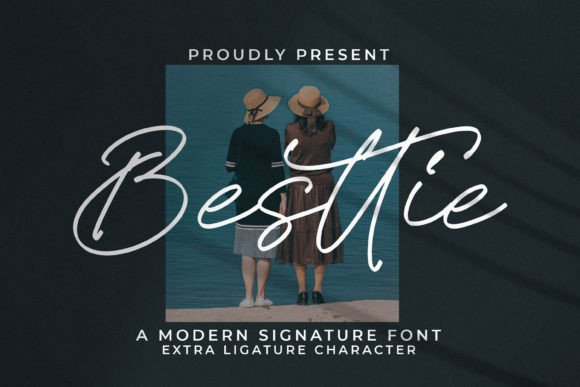
Besttie: The Handwritten Font That Elevates Your Brand’s Premium Touch
In a digital landscape saturated with rigid sans-serifs and overly ornate serif fonts, finding a typeface that feels both personal and polished can be a challenge. This is where Besttie steps in as a versatile solution for designers, entrepreneurs, and creatives who want to infuse their projects with a sense of luxury and human connection. It is not just another decorative script; it is a carefully crafted handwritten font designed to bridge the gap between casual warmth and high-end sophistication.
Besttie is built for those moments when you need your design to whisper elegance rather than shout for attention. Whether you are crafting a logo for a boutique skincare line or designing the packaging for artisanal coffee beans, this font provides the visual weight and flow necessary to convey quality. Its modern aesthetic ensures it does not feel dated or overly traditional, making it suitable for contemporary brands that value authenticity alongside style.
Why Besttie Fits Modern Luxury Branding
The term "luxury" often brings to mind minimalism, but true premium branding also requires a touch of personality. Besttie achieves this balance through its fluid strokes and natural variation. Unlike robotic scripts that look generated by software, Besttie mimics the subtle inconsistencies of hand-lettering, which helps build trust with consumers. People connect with things that feel human, and using a handwritten font signals that there is a real person behind the product.
This font is particularly effective for industries where craftsmanship is key. If you are selling handmade jewelry, organic cosmetics, or custom furniture, Besttie reinforces the narrative of care and detail. It works beautifully on business cards, allowing your contact information to feel like a personal note rather than a corporate formality. The PUA encoding means you have access to all glyphs and swashes without jumping through technical hoops, ensuring your designs remain clean and professional from start to finish.
Real-World Applications for Creatives and Entrepreneurs
One of the strongest assets of Besttie is its adaptability across various mediums. Here is how different professionals are currently leveraging this typeface to enhance their visual identity:
Product Packaging and Retail Design
Shoppers make split-second decisions based on shelf appeal. A well-placed Besttie headline on a soap box, wine label, or tea tin can instantly communicate "premium." Because the font has a strong presence, it remains legible even at smaller sizes on narrow labels. Imagine a chocolate brand using Besttie for its tagline, paired with minimalist photography—the contrast creates a sophisticated hierarchy that draws the eye immediately.
Apparel and Merchandise
T-shirt designs and tote bags are moving away from loud graphics toward typographic statements. Besttie is ideal for motivational quotes, brand names, or event merchandise. Its clean lines ensure that the text does not get lost in the fabric texture, while the handwritten style adds a layer of approachability. For fashion brands, using Besttie on shopping bags can elevate the unboxing experience, making the customer feel like they are part of an exclusive club.
Digital Content and Social Media
In the age of Instagram and Pinterest, aesthetics drive engagement. Quotes overlaid on beautiful backgrounds perform exceptionally well when paired with elegant scripts. Besttie offers enough structure to remain readable on mobile screens while providing the flair needed to stop the scroll. Photographers often use it as a watermark because it is distinctive enough to protect their work without overpowering the image itself.
Specific Use Cases Across Industries
While many fonts claim versatility, Besttie shines in specific scenarios where tone is critical. Let’s look at how different sectors can utilize this tool effectively.
- Weddings and Events: Invitations, save-the-dates, and menu cards benefit greatly from the romantic yet modern vibe of Besttie. It avoids the cliché of overly curly Victorian scripts, offering instead a chic, editorial look that fits well with contemporary wedding themes.
- Homeware and Interior Design: Labels for candles, diffusers, or decorative pillows require a font that complements texture. Besttie’s smooth curves mimic the softness of textiles and the sleekness of ceramics, creating a cohesive visual language for home decor brands.
- Book Covers and Publishing: For memoirs, poetry collections, or lifestyle guides, the cover needs to hook the reader emotionally. Besttie serves as an excellent title font that suggests intimacy and storytelling, inviting the audience into a more personal narrative.
- Greeting Cards: Whether for birthdays, holidays, or thank-you notes, the sentiment matters most. A handwritten-style font like Besttie makes the message feel bespoke and heartfelt, much like writing it out yourself.
Technical Considerations for Smooth Implementation
Before integrating Besttie into your workflow, it is helpful to understand its technical backbone. The font is PUA (Private Use Area) encoded. For the average user, this simply means that special characters, ligatures, and swash variations are mapped to specific codes within the Unicode standard. While this might sound complex, the practical benefit is ease of access. You do not need to hunt for alternate versions of letters in separate files; everything is contained within one robust font file.
This encoding allows for greater flexibility in design layouts. You can create unique letter combinations that add character to your headlines without cluttering your project folder with multiple font files. However, it is important to test your designs across different devices and platforms. While PUA encoding is widely supported, some older systems or specialized printing software might handle these extended glyphs differently. Always preview your final output in the medium where it will be displayed, whether that is a web browser, a mobile app, or a physical print proof.
Maximizing Impact Through Strategic Pairing
No font exists in isolation. To get the most out of Besttie, consider how it interacts with other typefaces. Since Besttie is a display font with significant visual weight, it pairs best with simple, neutral sans-serifs or clean serifs for body text. The contrast between the structured secondary font and the flowing Besttie creates a dynamic tension that keeps the design interesting.
For instance, if you are designing a poster for a photography exhibition, use Besttie for the main title and event details, but rely on a lightweight sans-serif for the artist bio or ticket information. This hierarchy guides the viewer’s eye naturally, ensuring that the emotional impact of the script is felt first, followed by the necessary logistical details. Avoid pairing Besttie with other decorative or highly stylized fonts, as this can lead to visual chaos and dilute the premium feel you are trying to achieve.
Final Thoughts on Choosing the Right Typeface
Selecting a font is about more than just aesthetics; it is about communication. Besttie offers a compelling option for anyone looking to add a layer of refined elegance to their creative projects. Its ability to span from digital watermarks to physical product packaging makes it a valuable asset in any designer’s toolkit. By focusing on real-world applications and understanding its technical nuances, you can leverage Besttie to create designs that not only look good but also resonate deeply with your audience.
Whether you are a startup founder defining your brand voice or a seasoned graphic designer seeking inspiration, Besttie provides the premium taste required to stand out in a crowded market. Take the time to experiment with its swashes and weights, and let the natural flow of the handwriting bring a human touch to your work.